
You say something you regret. Someone criticizes you. You get bad news.
The emotion hits like a wave: anger, shame, fear, whatever. Your body floods with it. And then, if you're like most people—you stay in it for the next hour. Or day. Or week.
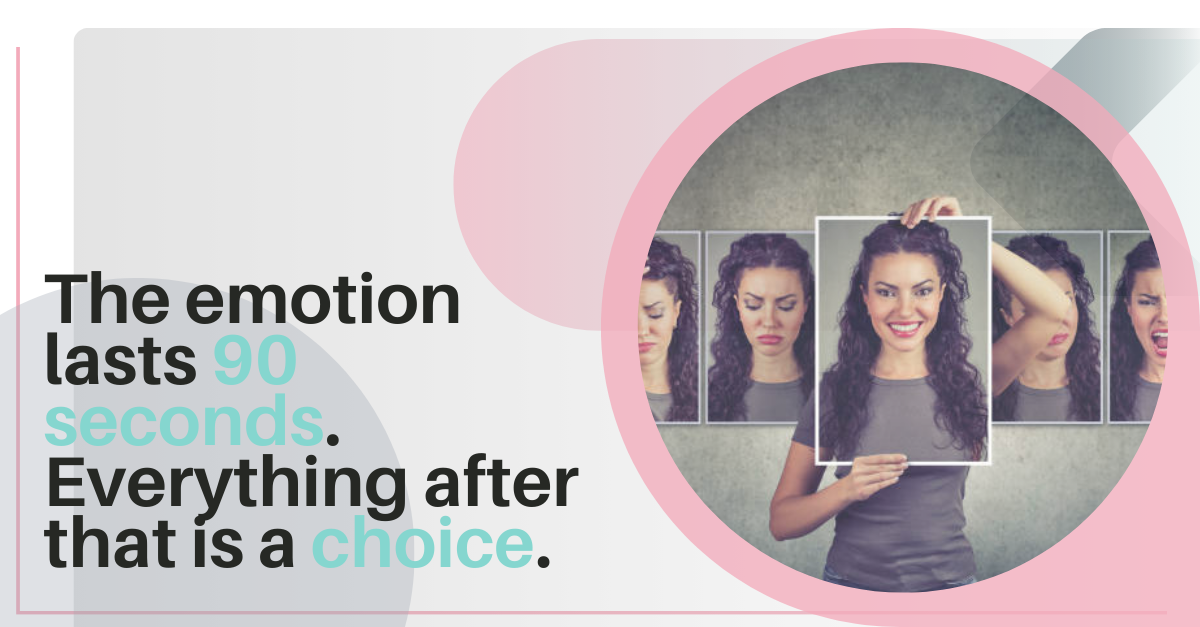
Here's what neuroscience knows that changes everything: the initial chemical surge of any emotion lasts about 90 seconds. That's it. Ninety seconds from trigger to biochemical completion.
Everything after that? You're choosing to re-trigger it.
Not judging, just data. Here's how to ride the 90-second wave without drowning in it.
The Science Behind the 90-Second Rule
Dr. Jill Bolte Taylor, a neuroanatomist, introduced the 90-second rule: when we react to something in our environment, a 90-second chemical process occurs in our bodies. Your brain releases stress hormones, such as cortisol, adrenaline—and they flood your system.
If we wait that long to respond, stress chemicals will have left the body.
But here's the part nobody tells you: after the brain-body-emotional reaction is complete, a person makes a choice "to stay in the emotional loop" or not.
When you wait a full 90 seconds, you can avoid getting caught up in the loop of thoughts that further stimulate your emotions.
You're not suppressing the emotion. What you are doing this time is letting the initial wave pass before deciding what to do next.
How to Use the 90-Second Rule (In the Moment)
Step 1: Notice the Wave Hit (5 Seconds)
Something triggers you. Your body reacts: chest tight, heart racing, heat rising, tears starting.
Don't fight it. Just notice: "Okay, wave incoming."
Emotions usually begin with physical responses—anger may show up as chest tightness, anxiety as stomach knots.
Step 2: Name It (10 Seconds)
There are three steps to allowing an emotion to dissipate in 90 seconds: Identify it, label it, and observe it without trying to change it.
Out loud or in your head: "This is anger" or "This is shame" or "This is fear."
Labeling interrupts the story your brain wants to tell about why you should stay angry. You're just noting what's happening.
Step 3: Let It Move Through (75 Seconds)
Here's where most people derail. They either:
- Fight it: "I shouldn't feel this way"
- Feed it: "And another thing—"
- Flee it: Distract immediately
Instead, just be with it. Feel where it lives in your body. Notice it shifting, peaking, starting to ebb.
Safe movement helps:
- Shake your hands out
- Take three deep breaths (longer exhales)
- Pace slowly if you can
- Press your feet into the floor
You're giving the chemicals somewhere to go while they clear your system.
Step 4: Check In (10 Seconds After)
Ninety seconds later, the wave has passed. Check: is the intensity the same or lower?
Lower? The chemical surge completed. What you're feeling now is residual—real, but different.
Same? You're probably re-triggering it by replaying the story. That's okay. Notice that. Try another 90 seconds.
What the 90-Second Rule Doesn't Mean
- It doesn't mean emotions disappear. You'll still feel things after 90 seconds. But the peak—the chemical flood—passes. What remains is more manageable.
- It doesn't mean you can't act. Sometimes action is needed. But action after 90 seconds is response. Action during the surge is reaction. Big difference.
- It doesn't erase valid feelings. If you're angry about something unjust, you'll still be angry. But you won't be chemically hijacked while deciding what to do about it.
It's not suppression. You're riding the wave, not pushing it down. There's a huge difference.
When to Use the 90-Second Rule
- Before responding to a triggering message. Read it. Feel the surge. Wait 90 seconds. Then reply (or don't).
- After a conflict. Someone said something hurtful. Give yourself 90 seconds before you decide how to respond.
- During anxiety spikes. Panic feels endless but the chemical peak lasts 90 seconds. Ride it.
- When shame hits. Made a mistake? The shame surge passes. What's left is information about what you want to do differently.
How Petals Health Supports the 90-Second Rule
Even knowing the rule, remembering to use it mid-emotion feels impossible. Petals Health AI makes it accessible.
90-second guided timer starts with one tap. Gentle prompts walk you through: Notice. Name. Breathe. The timer does the tracking—you just ride it.
Emotion wave log. Note what triggered you, how intense it was, whether you waited. Over time you see patterns: which triggers hit hardest, which emotions you struggle to ride.
Post-wave check-in prompts. After 90 seconds, Petals asks: "Intensity now?" and "Do you need another 90?" You're building awareness without judgment.
Safe movement suggestions appear during the timer: shake hands, deep breaths, grounding techniques. Something to do with the surge that isn't fighting it.
When emotions are overwhelming or persistent beyond what self-regulation can manage, connect with a therapist through Petals immediately. The 90-second rule is a tool, not a cure for conditions requiring professional support—and we make accessing that care frictionless.
The Bottom Line: You Can Ride the Wave
Emotions aren't the enemy. The endless loop is.
The initial surge lasts 90 seconds. Feel it. Name it. Let it move through. Then decide what comes next from a place that isn't chemically flooded.
You're not controlling emotions. You're stopping them from controlling you.
Ready to ride emotional waves instead of drowning in them? Discover how Petals Health AI provides 90-second guided timers, emotion tracking, and regulation support—available when feelings hit hard.